Modernizing a 26-year-old Maltese institution, without losing what made it one.
Peking has been a fixture on Malta's restaurant scene since the 8th of May, 2000. Founded by Victor Stivala and now run by his daughter Lucy-Anne and his son Marvic, it's the kind of place locals grew up with. Noodles still made by hand. Dishes still cooked from scratch. Regulars still known by name.
In 2025, the family opened a sister brand: Peking Streetfood, a faster, more modern Asian street kitchen next door to the original restaurant. Same family, same standards, two different kitchens, one Peking.
When Lucy-Anne came to us, she carried something more than a business problem. She was modernizing the place her father built, and she wanted to do it right, without losing what made it Peking in the first place. The brief that followed turned into one of the most complete digital transformation projects we've taken on in Malta: branding, a new website, a full restaurant ERP, a custom kitchen display system, and a self-ordering kiosk on the walkway outside.
The new Peking website opens with a dedication: "in loving memory of Victor Stivala, founder, father, a success story." Every design decision on this project was made with that line in mind.
They just knew something was.
Like most established small businesses in Malta, Peking had been working with whoever they could find. A freelancer for the website. A different one for the POS. Another for whatever broke next. The result was patchwork. None of it talked to each other, none of it built specifically for them.
The bespoke POS system they'd been running for years was outdated. Workflows lived on pen and paper. Spreadsheets tracked what could be tracked. Most of the business didn't get tracked at all.
Worse: the system dictated how the restaurant ran, not the other way around. The team worked around the technology instead of being supported by it. Blind spots crept in. Operations slowed. The pace of two kitchens, one traditional and one modern, was outgrowing the tools.
What they really needed wasn't another point of sale. It was a unified restaurant management system, designed for how an actual family-run kitchen in Malta operates day to day. Lucy-Anne knew it. She just didn't know where to begin.
The country had modernized around them, and they weren't sure where to start catching up.
The brief, in one sentenceThe website opens with a dedication to Victor Stivala. Lucy-Anne's father. The man who started Peking in Buġibba on the 8th of May, 2000.
Every system decision we made on this project, from the speed of the kitchen display to the warmth of the new website, had to honour that line.
Modernize, but don't replace what makes the place itself.
We started with Saturday nights in the kitchen.
Before we wrote a line of anything, we spent weeks inside the restaurant. Sitting in on dinner service. Watching how tickets moved. Where chefs lost time. How the front-of-house compensated for what the system couldn't do. The patterns we needed to see weren't on a feature spec. They were in the gap between what the team did and what the system claimed to do.
The brief Lucy-Anne gave us was simple: "Fix the website. And maybe the POS." What we proposed was bigger.
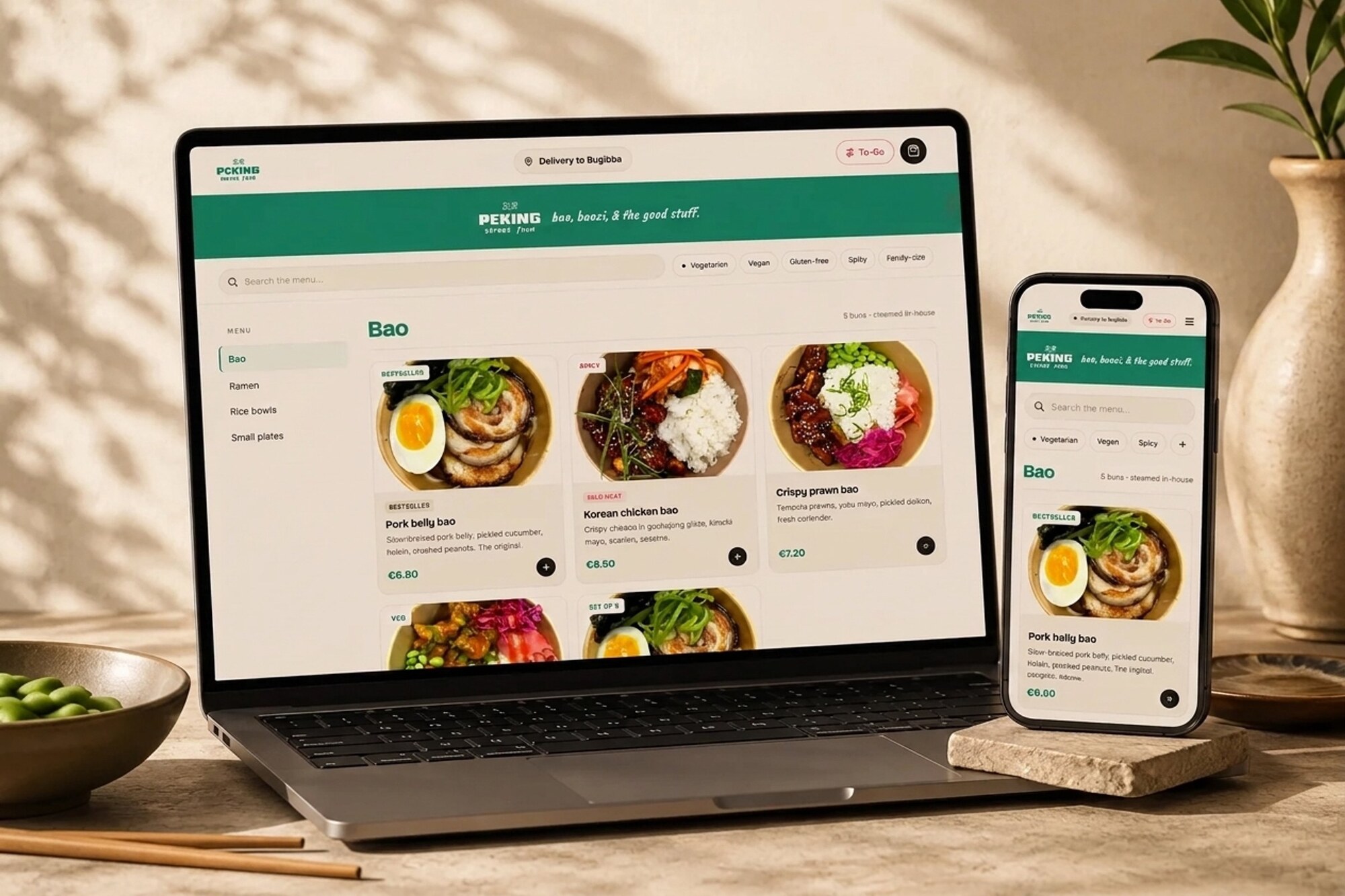
One unified system, built specifically for Peking, replacing every patchwork tool at once. Brand realization, a custom website, a full restaurant ERP covering point of sale, online ordering, kitchen display, inventory, order lifecycle, staff scheduling, and payroll. All in one place, all designed for how this restaurant in Buġibba actually works.
It was a riskier scope than buying an off-the-shelf POS. It also meant they'd never have to hire a different freelancer for a different problem again. One studio. One system. One number on speed dial.
They said yes.
Four interlocking pieces of work, designed to feel like one product. From the customer's first tap on the website to the kitchen's last batch of the night.
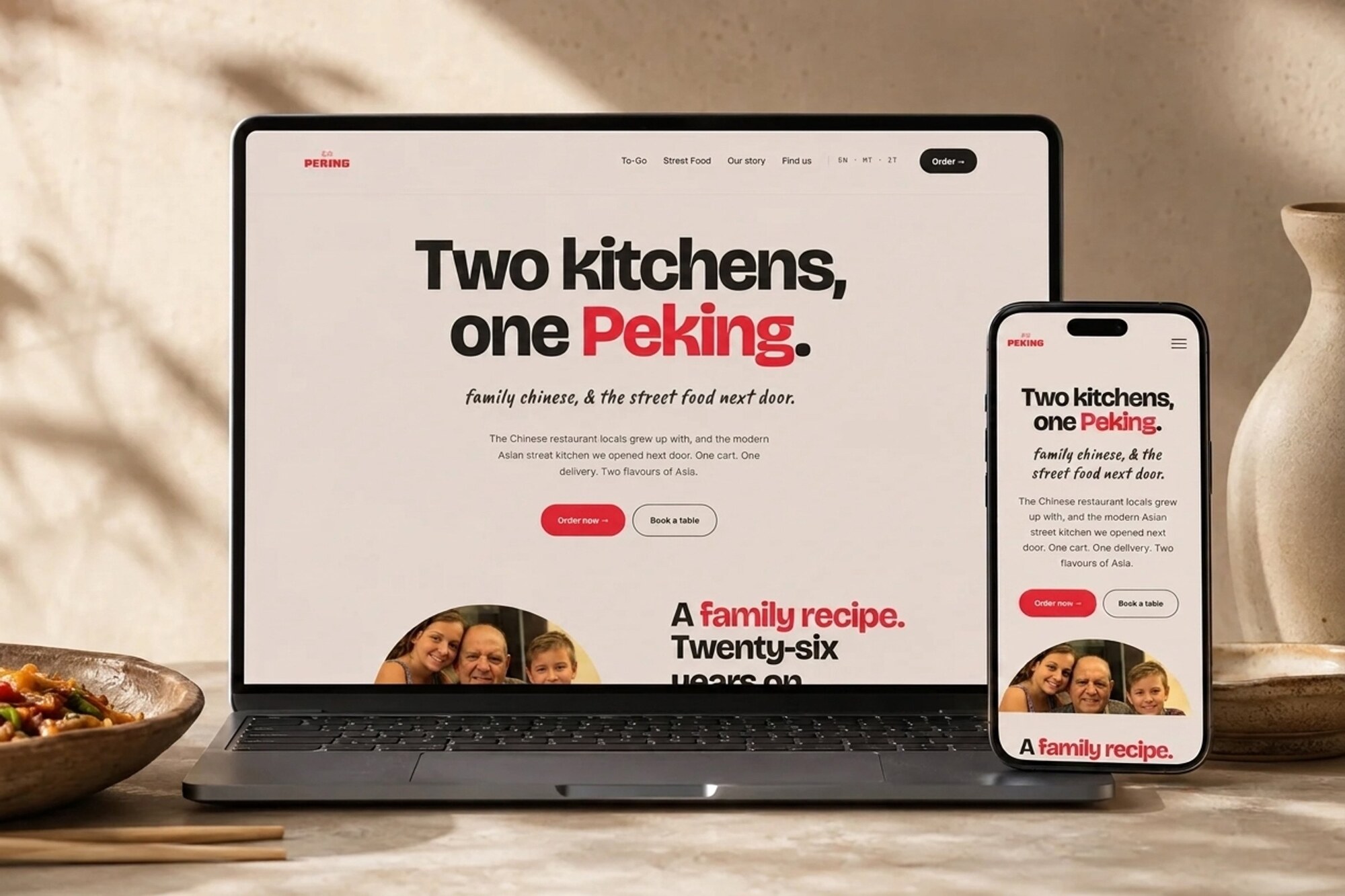
Peking had a beautiful brand identity already, designed by another agency, but it lived in a PDF and had never been executed anywhere real. Our first job was to bring it into the world. The new website is bilingual, mobile-first, and carries a custom storytelling layer that opens with a dedication to Lucy-Anne's father. Built from scratch as part of our custom web development work in Malta.
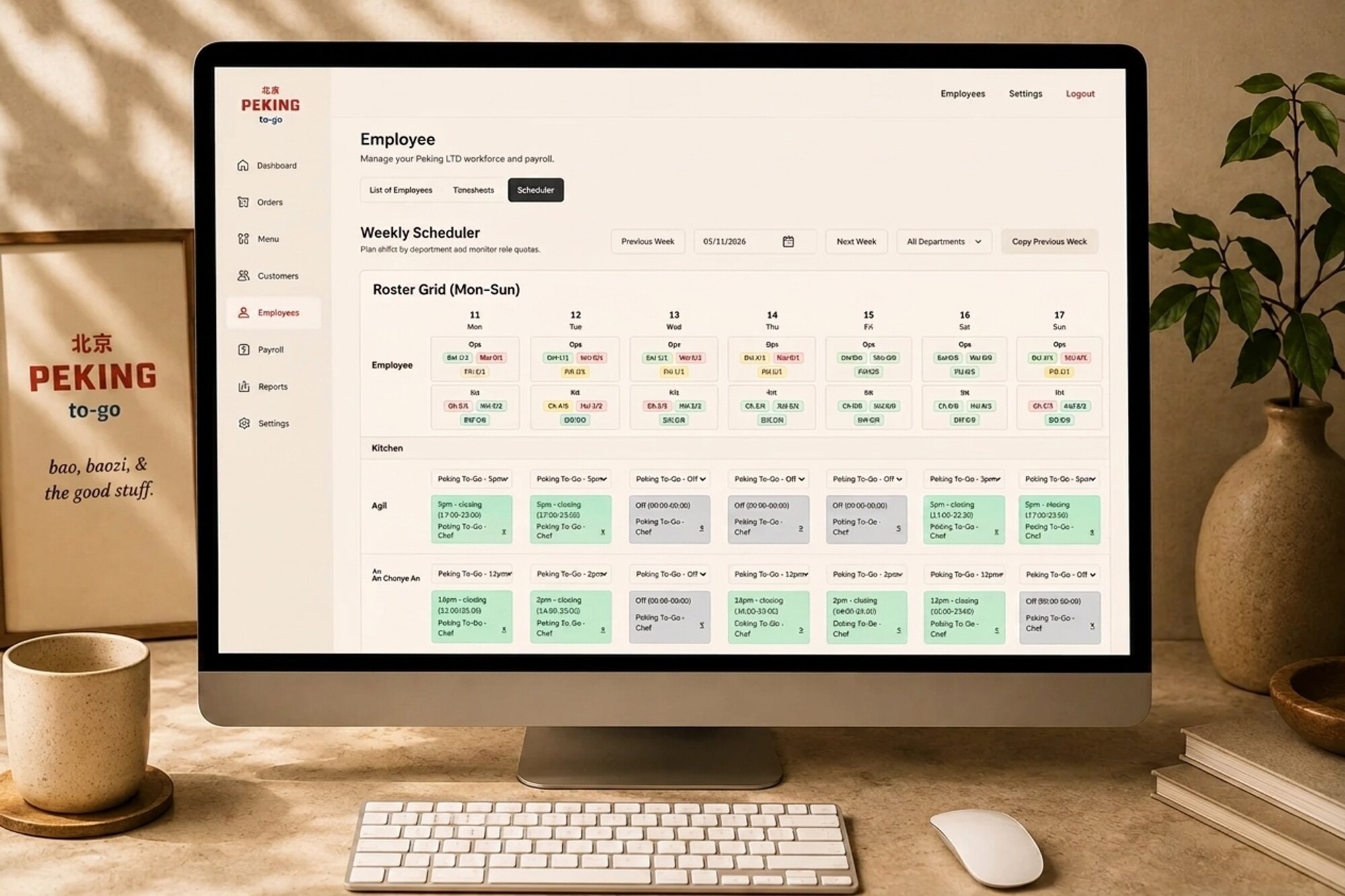
The heart of the project. A custom-built restaurant ERP that absorbed Peking's POS, online ordering, inventory management, order lifecycle tracking, staff scheduling, and payroll into a single platform. Built from scratch around how a Maltese family restaurant actually operates, replacing five off-the-shelf tools at once.
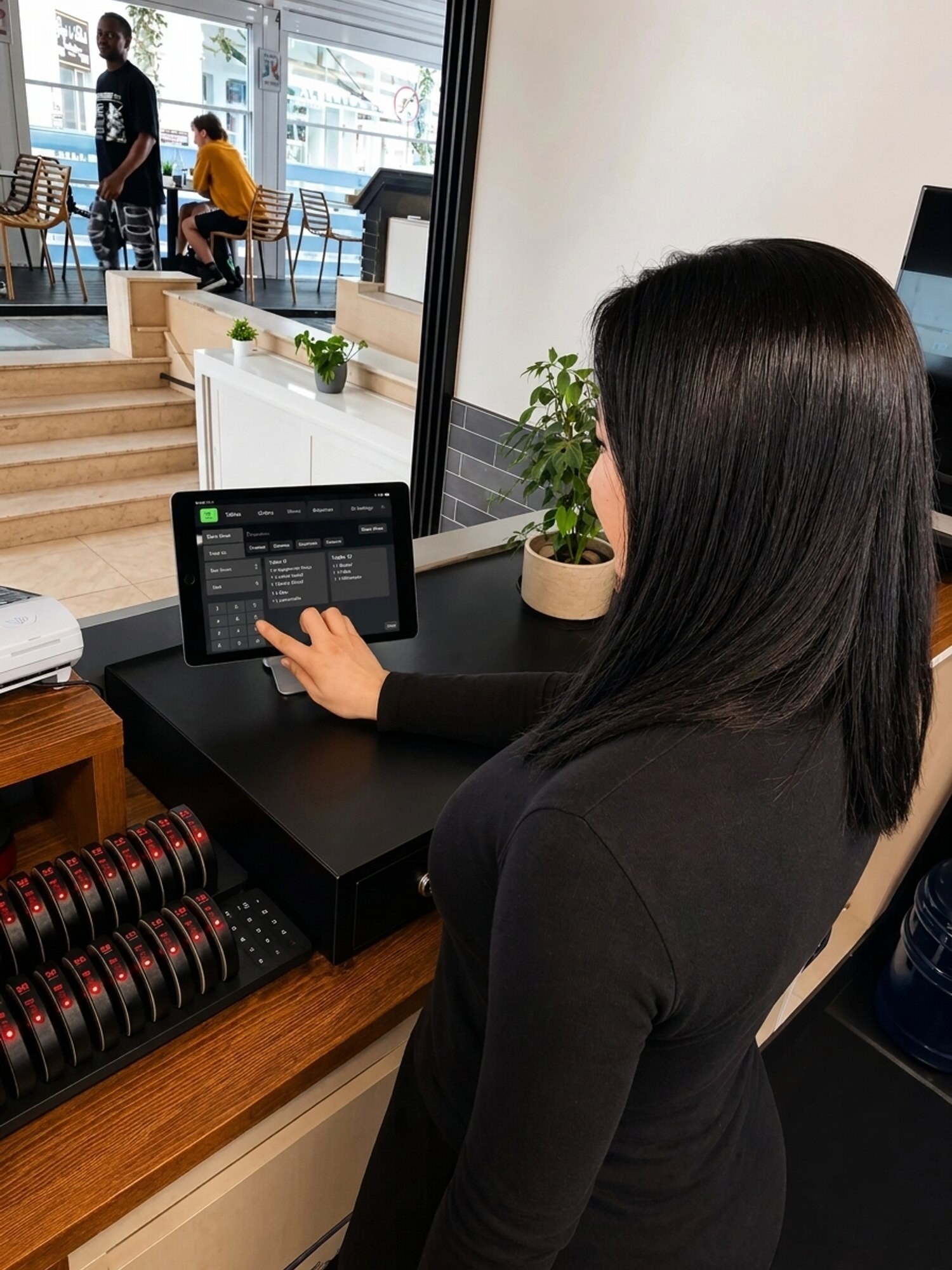
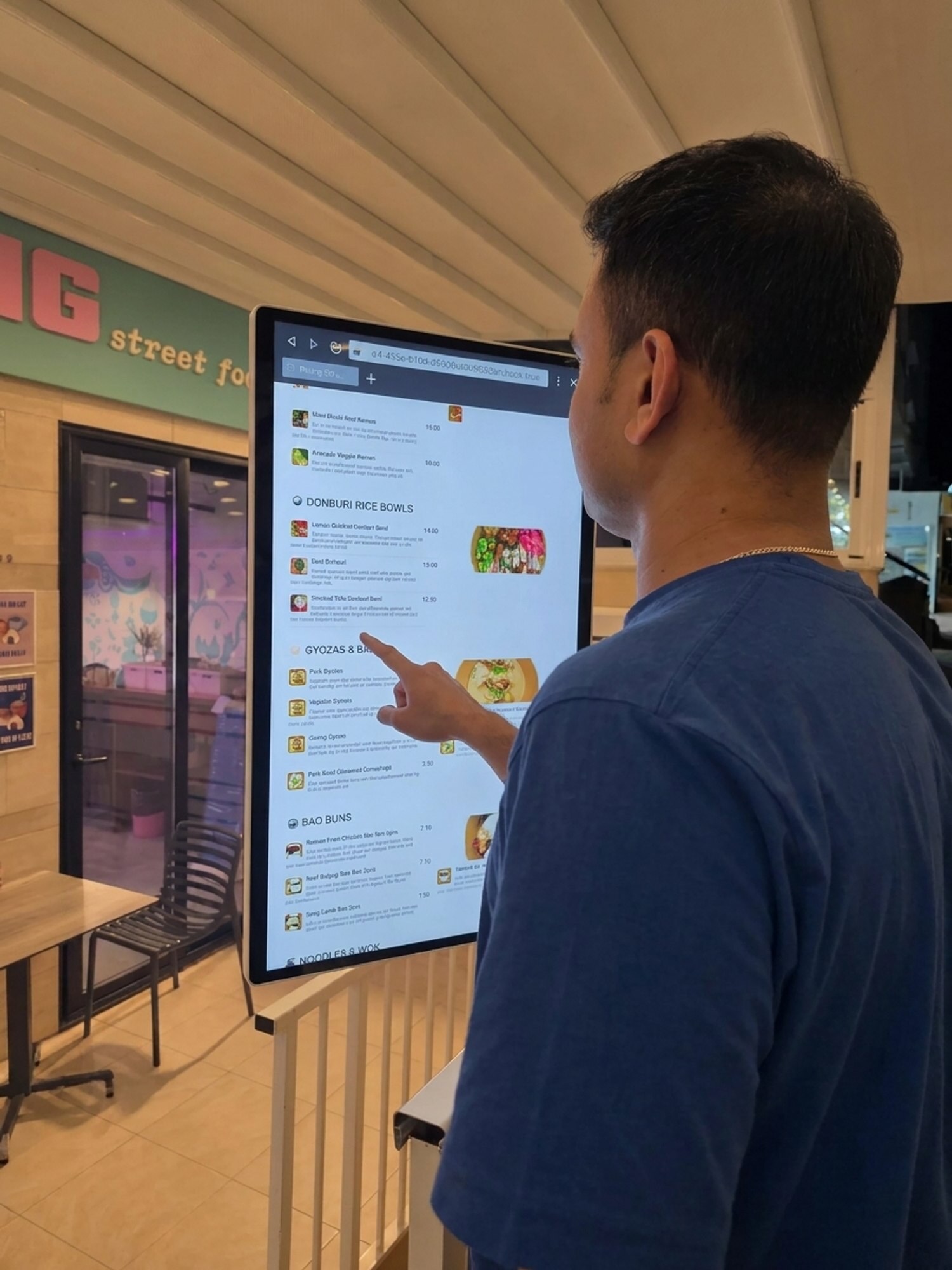
The visible side of the transformation. A POS terminal on the staff counter, a self-ordering kiosk out on the walkway in front of the restaurant, both running on the same ordering engine that powers the website. Same brand, same menu, same data, same prices. No staff bottleneck at the counter during the dinner rush. Customers walking past can order before they're even inside. And a quiet signal to every regular that Peking had stepped firmly into the present.
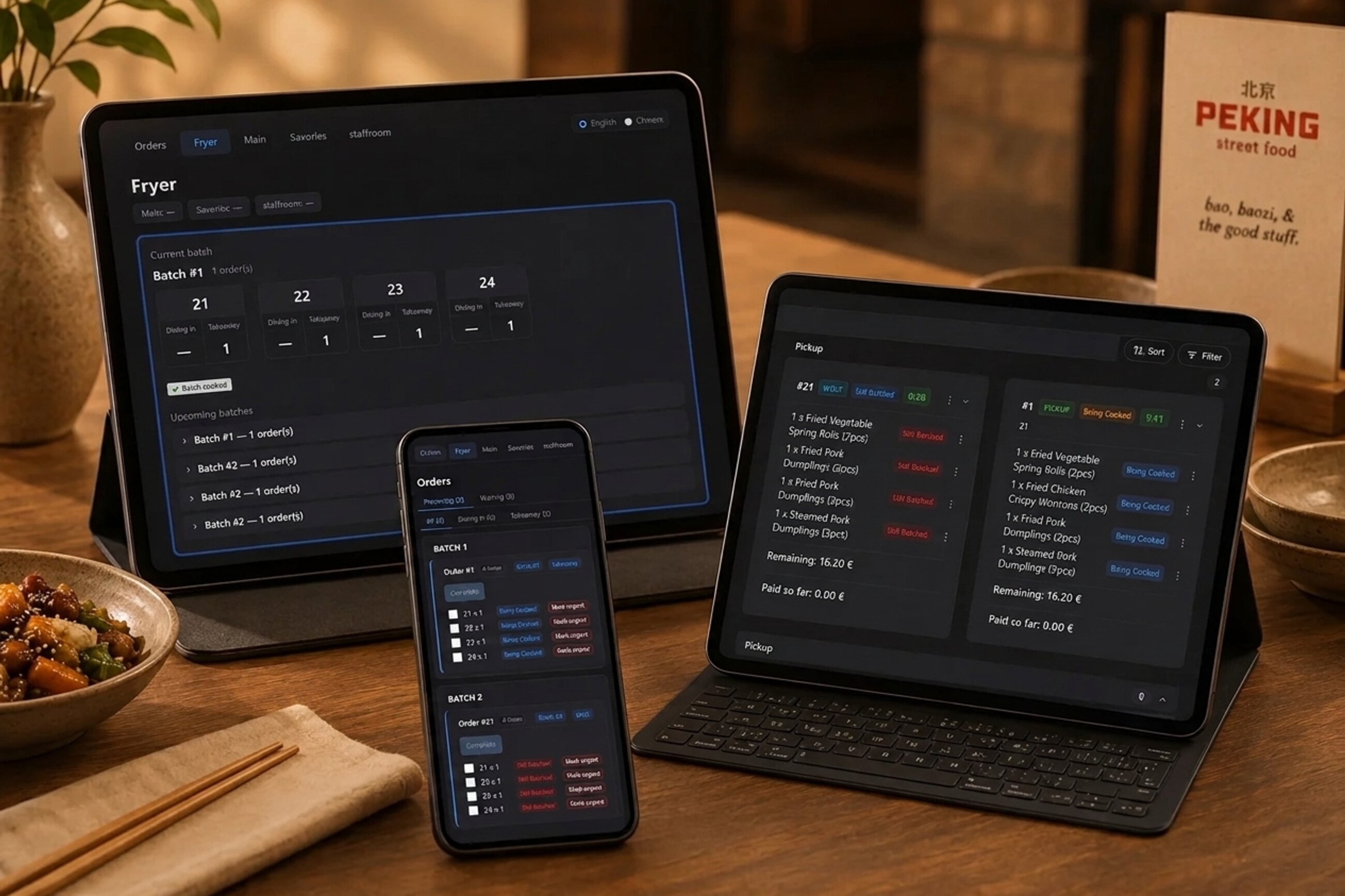
The screen the kitchen actually runs on. A custom kitchen display system, built station-by-station alongside the chefs on Saturday nights. Batching logic, real-time order states, and a bilingual EN/中文 interface, because the Peking kitchen runs in both languages. The first restaurant KDS we know of in Malta built specifically for a Chinese-Maltese kitchen.
This wasn't a software problem. It was a choreography problem.
Peking runs every day. Dinner service doesn't stop for a system migration. So we didn't run one. We ran a transition.
For the final weeks before launch, the new restaurant ERP shadowed the old one. Orders ran through both. Discrepancies were flagged in real time. Staff trained on the new flow during quiet hours, kept working the old flow during peak service. When we finally cut over in the last week of April, the team had been using the new system for a week without realizing they were rehearsing.
Launch day ran shorter shifts, smaller queues, and zero panicked phone calls.
Labour costs are down 18%. Turnover is up 14% versus the same period last year. The team across front of house, kitchen, and management adopted the new restaurant management system without resistance. Quality went up because efficiency did. For the first time, the owners of a Malta family restaurant can see every part of their business from one screen.
But the number we're proudest of isn't on a dashboard.
The team stopped working around their tools. The system finally works for them.
"I've never had someone on speed dial,
until you came around."
We launched in April. We still show up.
Sometimes for new features. Sometimes for a question. Sometimes just for dinner.
Peking isn't a project we delivered. It's a business we still help run.
Your digital problems, solved over coffee. Let's grab one.
Tell me about your idea