What you actually get.
Custom software at Blinklabs is not a slide of features. It is a working tool that your team uses on Monday and that makes a measurable thing happen in your business by the end of the quarter.
Internal tools
The thing replacing your spreadsheet, your shared inbox, your printed clipboard. Built around the actual workflow, not a generic CRM template.
ERP, POS, kitchen display
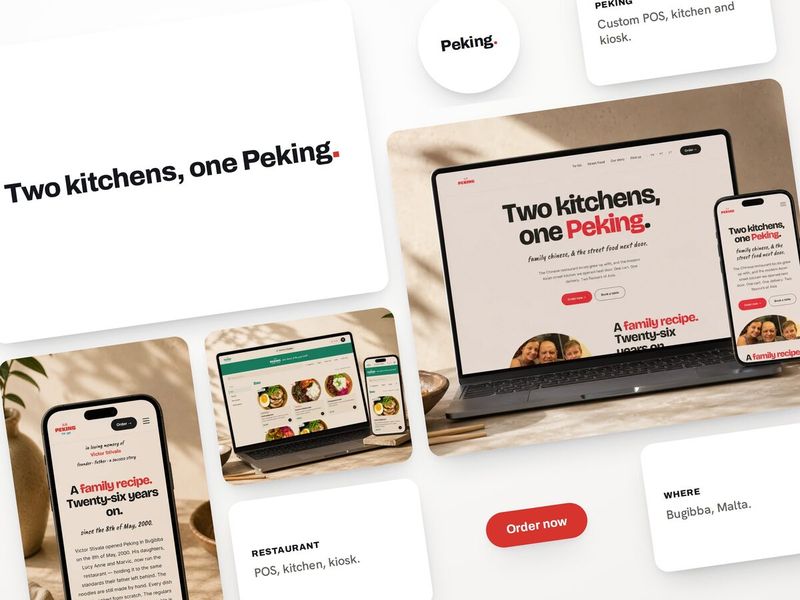
Full operating systems for Maltese hospitality and retail. Stock, suppliers, orders, kitchen routing, table management, reporting. The Peking project covers all of this and more.
Customer-facing platforms
Booking, ordering, loyalty, account, billing. The web app your customers log into, designed and built like consumer software, not enterprise software.
Licence and billing platforms
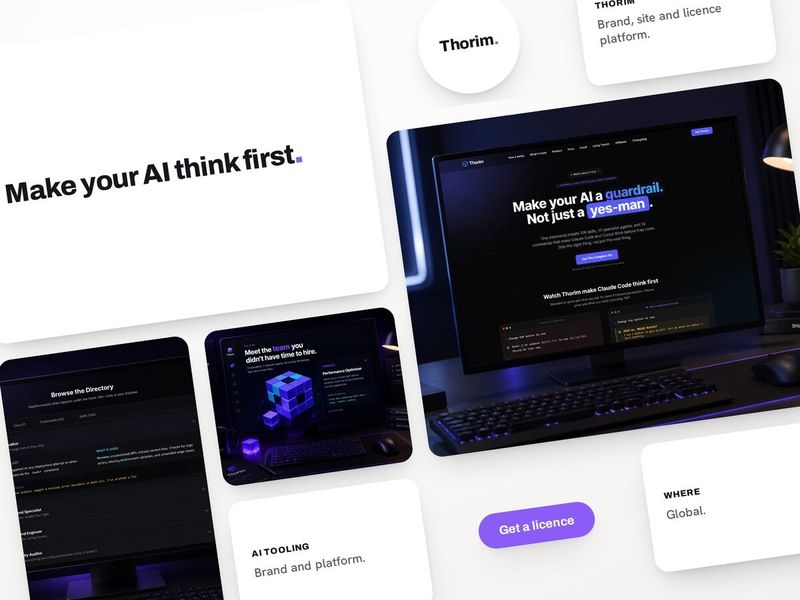
For SaaS founders and digital product makers: Stripe checkout, licence issuance, anti-piracy, affiliate workflows, admin dashboards. The Thorim project shipped this in one month and has 1,000+ purchases.
Integrations
Stripe, calendar APIs, food-delivery aggregators, accounting tools, email providers. The Maltese-specific stack: hooked up properly, kept working.
Ownership and source
The code is yours, the database is yours, the hosting is yours. No platform fee, no per-user trap, no licence to renew. Cancellable any time without losing access to your data.
How we work.
Four short rounds. Working software early, polish later. We do not draw diagrams for six weeks before writing a line of code.
An hour, in your office
We watch the actual workflow happen. The Excel sheet, the receipt printer, the chef yelling, the messy bit. That is the spec.
Real software, week one
By the end of week one there is a working thing on a real URL. Ugly, partial, but doing the one job. Feedback before opinion calcifies.
Iterate, ship, iterate
We add the rest in small, visible slices. Every two or three days, a new version. Your team uses each one. Bugs surface fast.
From old system to new
A planned, supervised switch. Data imported, team trained, old system kept warm for a week as backup. We are on-call during cutover.
Build versus buy: an honest answer.
Most agencies will tell you to build. Most software vendors will tell you to buy theirs. Here is the actual decision tree.
- Buy off-the-shelf if there is a mature product that already solves at least 80% of your problem, the remaining 20% is something you can work around, and the subscription is something your business can comfortably afford long-term.
- Build custom if the workflow is genuinely specific to how your business actually runs, if you have tried two off-the-shelf options and they pushed you to change how you work (in ways that hurt the business), if the per-user pricing of the off-the-shelf option will exceed the cost of the build inside two years, or if the data must live somewhere you control for compliance reasons.
- Combine if the answer is a good off-the-shelf tool for the standard parts (accounting, payroll), plus a custom thin layer for the parts that are specifically yours (ordering, kitchen, customer-facing flow). We do this regularly.
We will tell you honestly which one is right. We have walked clients away from a custom build when an existing tool was the right answer. That is part of the job.
What 26 years of Maltese restaurant operations looks like in software
The Peking Ltd. project replaced a stack of legacy tools with a single custom platform: ERP for back office, POS for front of house, kitchen display for the line, self-ordering kiosk for the entrance, supplier ordering tied to live stock, reporting tied to the accountant. Built in one continuous sprint. Result: labour cost down 18%, turnover up 14%, in the first reporting period after launch. Full case study below.
What it costs in Malta.
The honest answer: it depends on scope, and the spread is wide.
- A small internal tool (a single workflow, 1–3 user roles, no integrations) starts in the lower end of the indicative range on the homepage estimator.
- A customer-facing platform (accounts, billing, dashboards, multiple roles) sits in the middle.
- A full operating system (the Peking-scale ERP plus POS plus kitchen plus kiosk) sits at the top of the indicative range and is best discussed over a real kickoff.
We are happy to do a free, no-pressure scoping call to give you a real number for your real situation. The estimator is a useful first cut. The conversation is the real answer.
Real Maltese custom-software projects.
Two projects on opposite ends of the spectrum. Both built in Malta, both shipped, both with real outcomes attached.
Peking Ltd.
Full custom restaurant operating system: ERP, POS, kitchen display, self-ordering kiosk. A 26-year Maltese family business modernised end to end. Labour cost down 18%, turnover up 14%.
Thorim
Custom licence platform for an AI coding assistant: Stripe checkout, Cloudflare Worker validation, admin dashboard, affiliate workflows, anti-piracy. Plus brand and marketing site. Built in 30 days. 1,000+ purchases since launch.
Why hire a Maltese custom-software studio?
Custom software for a small Maltese business needs someone who shows up. Who can sit in your office on a Tuesday afternoon and watch the actual chef plate the actual dish. Software built without that context fails in the messy ways business is actually messy. An overseas dev shop, even a good one, cannot do that.
The other reason: data sovereignty. Your customer data, your business operations data, your accounting trail. All of it should be running on infrastructure you control, in the EU, with clear, written terms about access. Off-the-shelf vendors hold this in opaque ways. A custom build, hosted properly, does not.
And the practical reason: when something goes wrong at 9pm on a Friday, you want a Maltese phone number to call. Not a ticket queue and a 12-hour reply window from another timezone.
Custom software in Malta · FAQ.
How much does custom software cost in Malta?
It depends entirely on scope. A focused internal tool replacing a spreadsheet starts at one end of the range. A full operating platform (Peking's ERP plus POS plus kitchen display) sits much higher. We will not quote without a kickoff call because the difference between two superficially similar projects is often an order of magnitude. The homepage estimator gives you a starting indicative range in two minutes.
How long does custom software take to build in Malta?
A small internal tool: three to six weeks. A full custom platform: six to sixteen weeks. The pacing depends on the data model, the integrations (Stripe, calendar, accounting, payment processors), and how quickly we can ship a real working prototype to your team for feedback.
Should I build custom software or buy off-the-shelf?
Buy off-the-shelf when an existing product solves your problem inside an acceptable percentage of fit. Build custom when the workflow is specific to your business, when the off-the-shelf options are subscriptions that will exceed the build cost inside two years, or when the data needs to live somewhere you control. We have built both situations more than once. We will tell you honestly which one fits.
Do you maintain the software after it ships?
Yes. Most clients sign a small monthly maintenance agreement that covers hosting, security patches, small tweaks, and responsive support. No long-term lock-in. You can cancel any time and take the source code with you.
Where does the data live?
On infrastructure we set up for you, typically in the EU. You get the keys. We do not host your business inside a marketing-funnel platform you do not control. Backup, restore, export are all built in from day one.
Can you also design the brand and the marketing site that wraps the software?
Yes. The whole studio is built around delivering brand identity, websites, and custom software from one person. The Thorim project was a single one-month sprint that covered all three. It is usually cheaper and faster to do them together than to find a brand designer, a developer, and a software engineer separately.